AI in Radiology Education: Preparing Future Radiologists for the AI Era
SaveLife.AI
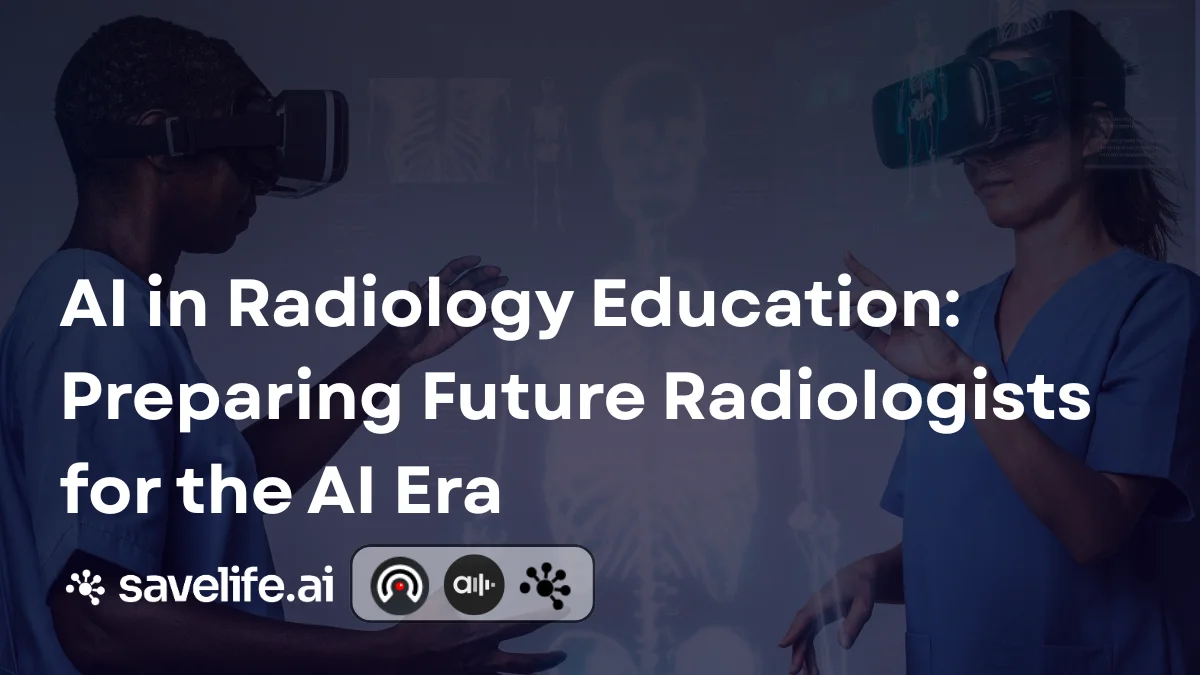
Artificial intelligence is reshaping radiology education by improving diagnostic accuracy and automating workflows. Radiologists need comprehensive training in AI applications, limitations, and ethical considerations.
The growing presence of AI in radiology has created a strong demand for AI education. Trainees and practicing radiologists need AI literacy to evaluate and implement these tools critically.
The Growing Demand for AI Education
AI in radiology is evolving similarly to MRI in the 1980s. Surveys show strong interest in AI education among medical students and radiology trainees. Early AI exposure can help trainees see AI as a tool that enhances rather than replaces radiologist expertise.
Essential Components of an AI Curriculum for Radiologists
- Fundamentals of Machine Learning: supervised/unsupervised learning, deep learning, neural networks, model evaluation metrics, data privacy, potential biases
- Imaging Informatics and AI Integration: PACS, interoperability standards, workflow efficiency
- Governance, Ethics, and Regulation: FDA approvals, ethical concerns, ongoing monitoring
- Clinical AI Applications: automated image analysis, AI-assisted decision-making, case studies
- Economic and Business Considerations: KPIs and reimbursement models for AI-based services
Challenges in Implementing AI Education
- Limited Access to AI Mentors
- Time Constraints in Residency Training
- Varying Levels of AI Knowledge Among Trainees
- Keeping Pace with AI Advancements
AI-Augmented Learning
- Personalized Learning and Case Assignments
- Automated Case Curation and Simulation-Based Training (including GANs for synthetic imaging cases)
- AI-Assisted Workflow and Performance Monitoring
- Balancing AI Assistance with Critical Thinking
FAQs
- Is getting a radiology degree hard? Most RT programs take about 24 months after an associate's degree.
- What education do you need for radiology? Minimum: Radiologic Technology associate's degree.
- How many years to learn radiology? About 13 years total including undergraduate, medical school, internship, and residency.
- Is radiology harder than RN? Nursing school is often harder due to more hands-on experience.
- Difference between radiologist and radiology tech? Radiologist interprets images and diagnoses; tech performs imaging procedures.
See it in action
Transform Your Clinical Practice
Experience AI-powered clinical documentation, radiology reporting, and more, live.
Book a Free Demo
Leave a Comment
Your comment will be reviewed before it appears.